A HALLOWEEN CHILL … A CELTIC FROST

A DESCENT INTO THE PANDEMONIUM

Early Halloween greets! Ready for a seasonal resurrection from the metal crypt?

Good – because Celtic Frost‘s 1987 meisterwork Into the Pandemonium is a dead cert Halloween enhancer. Here’s why. 

First, the artwork – that hellish extraction from Garden of Earthly Delights by Hieronymous Bosch – is pure badass badness that lays out the goth factor before you even hit play, especially if you’re eyeing the cassette artwork where the zoomed-in crop brings more proximity to flames, falling bodies and all-round damnation. 

Second, Celtic Frost always fits the ‘ween vibe and that’s a cold-bodied fact. But this album, when they went full tilt for orchestral strings, horns and operatic duets after To Mega Therion’s dabble, is a Halloween double-good. Avant garde was the descriptor of the day and whether or not that’s fully accurate, Pandemonium IS experimental and does smash genre orthodoxy and listener expectations so, for that, we salute. Art metal, progressive metal, experimental metal, maybe even death metal – as in, death hangs in its damp air – are all fair game, label-wise.

Looking at some reviews on Metal Archives though and we see that Into the Pandemonium isn’t universally loved. Lowest rating = 17%. Plenty of bile is hurled at One in Their Pride for its programmed beats, NASA samples and general non-metal spirit but it’s always sounded good to me, working like an oddball interlude where dashes of horror-suspense strings still manage to connect it to the rest of the record. Sure, it’s primitive tech-wise but this was 1987, FFS. What were electro-metal supremos Ministry doing back then? 

Becoming Ministry, that’s what. They sure as shit weren’t doing Stigmata. Not yet.  

Tom G Warrior’s voice draws plenty of criticism on the Archives – much bemoaning of the moaning. It’s almost a fair point but his style is essential to the Pandemonium mood and, surely, he’s gunning for an effect: the translucent nearly-dead. Hence the Halloween allure.

The first track is a cover of Mexican Radio (never checked the Wall of Voodoo original until today – decades of shameful oversight right there, it’s ace) and it rocks metally, but it’s the following Mesmerized that introduces the gothic undertones, un-thrash pace drag and wobbly spectrals that come to define Pandemonium’s tone. Claudia-Maria Mokri takes the backing vocals and Warrior’s guitar is, as ever, cloaked in mausoleum chill even when it flirts with 80s pop rock (anyone else getting a blinky flash of Steve Stevens’ pre-verse Rebel Yell riffing halfway through?). All the while, Martin Eric Ain’s rolling bass hollows the earthly life out of it.

Skipping past Inner Sanctum just for a sec, we get our first fully-fledged case of the non-metal avants. Tristesses de la Lune, all cold vapors and morose orchestration, is voiced entirely by Manu Moan and drips moonlit melancholy over dancing strings and buried buzzsaw grind.

But Rex Irae (Requiem) takes it further. This track, a full-on duet between Warrior and Mokri with an oddly groovesome meter, is the fullest realisation of orchestral haunt. String stabs, scrapes and accents alongside Warrior’s nearly-dead vox pitch into sweeping overtures that make it the goth standout of the album – and the first part of the Requiem triptych that took more than 30 years for Warrior to complete. If there’s one track to nab as a standalone Halloweener, this is it. Might as well add Oriental Masquerade while you’re at it, given that it shuts the album down with doomy ceremonial grandeur.  

So, there’s no shortage of graveyard atmospherics on Into the Pandemonium … but that doesn’t mean it lacks blackened metallics either. Inner Sanctum predates thrash metal’s move towards the mainstream four years before the Black Album but with more diabolus in musica, and I Won’t Dance (the Elders’ Orient) fucking MOTORS with anthemic cool and unbreakable beats.

Really, for Halloween, you could pick pretty much any Tom G Warrior record and it’ll fit. Sticking with Celtic Frost, Monotheist‘s bleak pitch-black brutality and To Mega Therion‘s gothic thrash energy are both right up there. But for seasonal spook in sound and vision, Into the Pandemonium just about has the edge – more wayward, irrational, mercurial and over-reaching.

It’s just that bit more vamp, don’t you think?
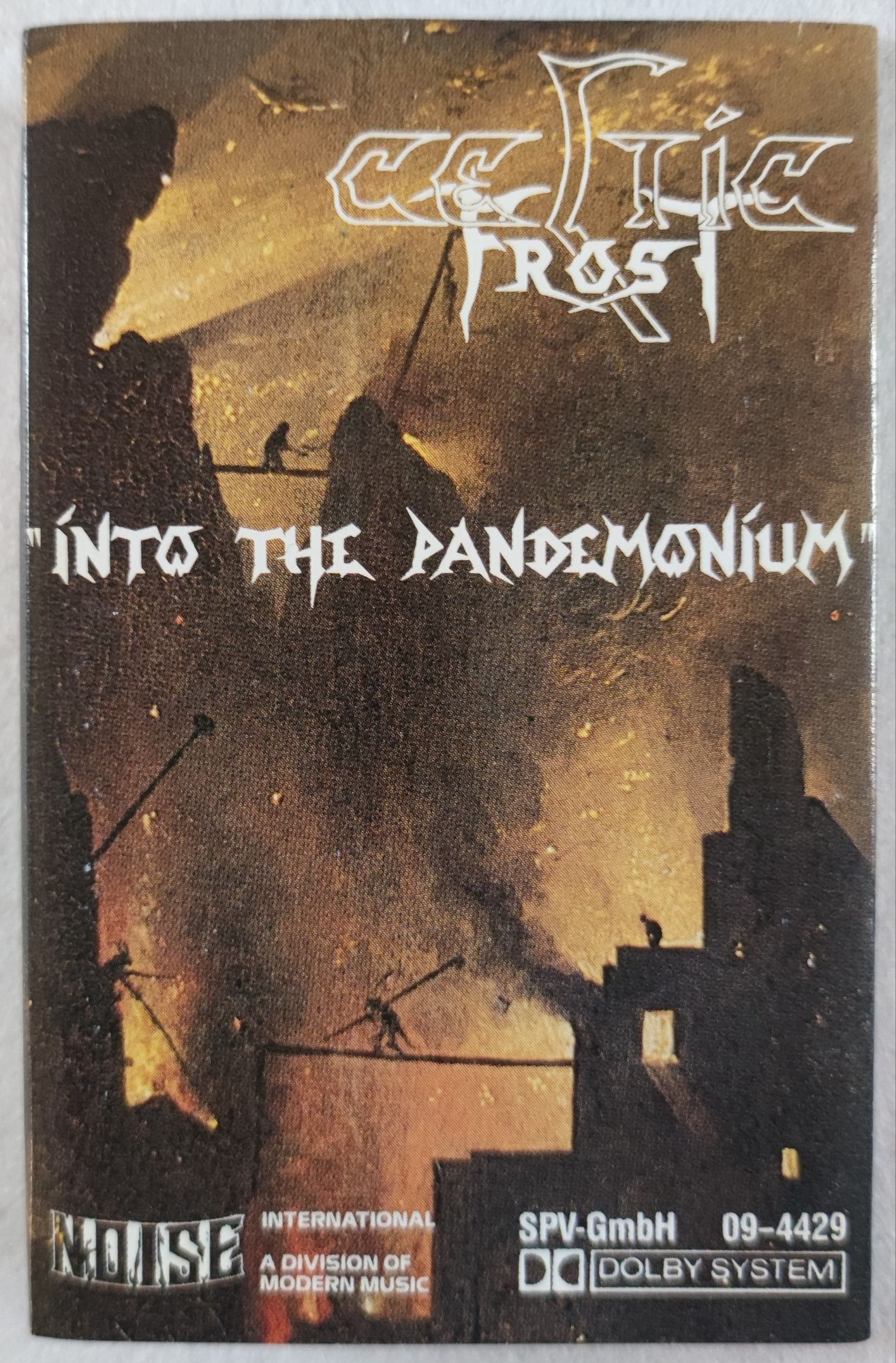
Into hell, Into the Pandemonium

Cassette tracklist:

Mexican Radio
Mesmerized
Inner Sanctum
Tristesses de la Lune
Babylon Fell
Caress Into Oblivion
One in their Pride
I Won’t Dance (the Elders’ Orient)
Rex Irae (Requiem)
Oriental Masquerade

(Sorrows of the Moon does not appear on the original tape but does appear on other formats. Tristesses de la Lune features Charles Baudelaire’s poem in French. Sorrows of the Moon is the English translation but has different music. Running orders vary depending on release and format. Confusing, I know…)

Want a nightmare soundtrack? Try this Sunn O))) for size. Or search Halloween for old-school metal playlists, creepsome cover versions, Mike Patton, Type O Negative, you get the gist
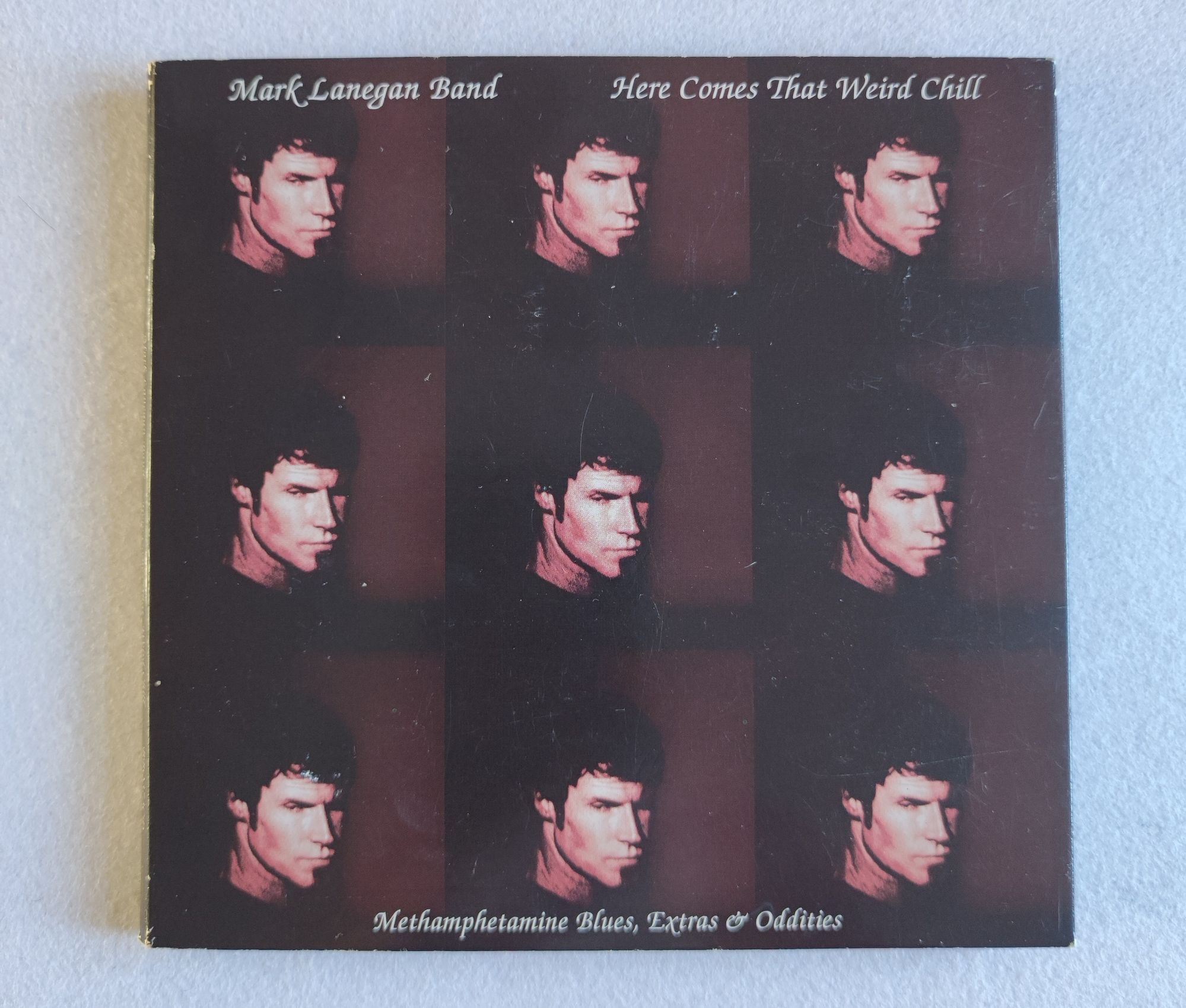
MARK LANEGAN BAND: Here Comes That Weird Chill

It seems absurd to place Mark Lanegan as a man of sunshine. And yet, so much of his music was made with desert scene players that he must have been drawn to it. 

Home is where the heat is? Maybe.

* * *

Anyone who knows Bubblegum knows Methamphetamine Blues. Alongside Hit the City, it’s one of the rock-action peaks from that 2004 album and here, on the preceding Here Comes That Weird Chill EP, it gets prime position: track #1. 

Methamphetamine Blues, Extras & Oddities

Driven by an electro-clank machine pulse, the Methamphetamine Blues groove is anything but bluesy. Fumes and distortion are the order of the day, more workshop grind than back-porch swing, with a sumptuous cast of backing singers teasing a gothic, seductive touch. Despite the huge cast, the loops and the near-constant lead guitar streams by Josh Homme and Dave Catching, it’s controlled … like a lot of Lanegan’s work. Containment, no histrionics. This one revels in taut compression.  

On the Steps of the Cathedral, a hymn-like confessional with surround-sound Lanegan choir and a muted beat, fades in/out with the ghosted air of a Masters of Reality interlude – fitting, given the presence of Chris Goss – before the amps strike back for Clear Spot. It’s a faithful cover, maybe even an unadventurous one given Beefheart’s many outer limits, but it lends itself to the same mechanised distortions as Methamphetamine Blues. For that reason, it works. Let’s rock.  

But from here, a looser vibe takes hold and the EP’s subtitle Methamphetamines, Extras & Oddities rings more true. Deen Ween brings the heat haze with his just-off-enough guitar solos through Message to Mine before the mood turns a 180 with this:  

“Break my heart and hope to die
before Lexington could slow down.
They say a chariot’s waiting
when you get cut loose.
The place starts swinging
when it’s me on the noose.”

When those words get spoken in Lanegan’s heaviest baritone over rain-sodden piano, they cut through everything

They sound too true. You believe. Lexington Slowdown is a double-take moment that reorients your listening and elevates the EP because this is where the already obvious quality shifts to next-level. This EP is what made Bubblegum a must-buy the following year. And this EP is probably why I’m more a Lanegan Band casual than a completist because, honestly, nothing else captures Mark Lanegan in rock mode as much to my own liking as fully as this does.      

If Lexington is pivotal then Skeletal History is definitive. The Voice leads, of course, but with alien interference crackling down the left side, desert dry riffs on the right and storm-brew bass and skittish beats locked down the centre, there’s no shortage of elements. No chorus, just flow, an ongoing slow eruption as a storm slowly builds. Explosions darken the track’s fadeout. Played like this, the music sounds less like a band than a telepathic convergence of forces. Vast, wide-open and ominous.

Wish You Well lightens the tone with a droning ebb and flow before Sleep With Me continues the Skeletal History vibe – but this is like the tentative calm after the threat has receded. Adrenalin slowing. Reprise extends Sleep With Me, softening further with immaculate bass lines while guitar distortions break the spaces around Homme’s dubby beat. 

In some ways, it’s harder to see this EP as the Mark Lanegan Band than the album that followed. His name is in the spotlight sure, but the smaller cast of core players – the desert hands like Alain Johannes, Dave Catching, Chris Goss, Josh Homme and Nick Oliveri – knit together like low-ego equals drawing on more than just the music. Maybe it’s their shared histories that make the difference. Maybe the tunes with Nick Oliveri just turn out differently (he plays on more here than Bubblegum). Maybe it’s nothing more than presentation: a bunch of looser experiments being given their own space to run. Whatever it is, something extra comes through in the way this EP flows and hangs together. 

Is it a Desert Session in all but name? 

Possibly, yes. And if so, it’s the most consistent of the bunch – the lack of joke tracks and guest singers make for a darker, more focused mood – and the one that fits Lanegan’s voice best.    

If you lapped up Bubblegum but somehow missed this … track it down: a small trove jammed with riches.     

* * *

NEWS – Bubblegum reissue out soon, includes Weird Chill
Just found out about this by chance today – Bubblegum is being reissued deluxe-style in August with Here Comes That Weird Chill (and other rarities) included on bonus discs, all for the 20th anniversary. Timing or what? Check Piccadilly Records for more.

WINTRY METAL? TRY HELLRIPPER

Is it too late for winter sounds and 2023 catch-ups? Probably. Then again, we’re not out of the darkness yet – not quite – and there’s still a stack of stormy gloom and wind chill to celebrate. For that, we need an unsunny soundtrack. And if a couple of moments from 2023 fit the bill, all the better.  

January/February is the year’s ultimate listening zone. Post-xmas hibernation means you can sink into those end-of-year lists and check what you missed (almost everything, it seems), spend a shiteload of time re-digging the old familiars that fit the season AND discover new-to-you old sounds that then become the foundation for winters future. It’s a cycle that repeats every year. Awesome.  

So, with icy blasts in mind, two albums leapt off the Metal Hammer end-of-year list.

HELLRIPPER – Warlocks Grim & Withered Hags

This is an absolute riot, a thrash ‘n roll explosion of blackened metal that pays homage to the old school – Metallica, Maiden, Motorhead, Bathory – but is fired by precocious Young Man Chops from the Highlands, Scotland. James McBain, aka Mr Hellripper, is pretty much a one-man studio band (sleeve notes: ‘Hellripper is: James McBain’) which means he shreds like a daemon at everything. Can you imagine eating breakfast with the guy? Cornflakes at 200bpm. Carnage.     

Anyway, back to the album and these words are more a reaction than a review because Warlocks Grim & Withered Hags puts such a demented headbanger smile on your face that you’ve just got to share the word with anyone who might not yet have found it. Solos blaze with melody through warp-speed thrash and black-metal throat while riffs groove and hook with anthemic potential. When Mester Stoor Worm closes the album down, it’s with an 8 and a half minute masterclass in epic metallic storytelling.

Disclaimer: it was actually Hellripper’s previous album, The Affair of the Poisons, that made the real first impression. After my must-order-Hellripper rush, Poisons was the fastest delivery. But I can say this: if you’re in for Poisons, you’re in for Warlocks. The Affair of the Poisons feels a shade more raw, Motorhead-ish/Kill ‘em All with Whiplash and Metal Militia vibes writ large. Warlocks Grim has classic speed/metal in its all-out attack but really, I haven’t got deep enough to know anything – too caught up in the frenetic energy, killer riffs and outlandish track titles (Goat Vomit Nightmare, Blood Orgy of the She-Devils, The Hissing Marshes, take your bloodied pick). Hellripper: a furious, glorious deathride. White knuckles mandatory.   

MYRKUR – Spine

Since dropping the Myrkur ball after Mareridt, the sight of Spine at #11 in the 2023 Metal Hammer list prompted a shameful wake-up. Myrkur is back? She sure is. And Spine brings all sides of Myrkur together into one. 

Spectral folk (Balfaerd), soft Scandi-pop choruses (Like Humans), melodic black-metal pace injections (Valkyriernes Sang), sweeping orchestral-vision (My Blood is Gold) and brooding goth-metal drama (Spine) are all present. Uniting every strand is, of course, Amalie Bruun’s ethereal vocals. Spine is her 33-minute musical tour through her new world of motherhood. 

As with the two Hellripper albums above, these words are only a reaction so no great finesse or vision, but excitability? Hell yeah. Next time you get slammed by snow drifts or chilled by subzero winds or blindsided by cold fog banks, reach for Myrkur or double up on Hellripper. Winter mood enhancers for sure.   

Hellripper: Warlocks Grim
Hellripper: Not at all grim

WALL: Wall / Vol 2

DESERT STORM BROTHERS BUILD INSTRUMENTAL RIFF ACTION

They like to be busy, those Desert Storm fellas. Not content with being the best metallic band in Oxford, Desert Storm are striving to be the best TWO metallic bands in Oxford.

How so?

Because drummer Ryan Cole and guitarist Eliot Cole have built a no-vocals home of riffs and called it Wall. Last year they added their second EP, the Sabbathly-named Vol 2, to their first EP Wall. Let’s stack ’em up and go check.

Wall Wall

WRATH OF THE SERPENT kicks off with a sludgy poundalong, which you’d probably expect given the Coles’ parent band. Give it two minutes though and we’re bullied off track by pacy thrash pickups, 5/4 riff interjections and headbanging slams, introducing us to the idea that Wall is perhaps the rougher, twitchier relative in the Storm clan. SONIC MASS plays the mid-tempo card, as does OBSIDIAN’s brutish Pelican-channelling-Godflesh beating, but LEGION is where Wall really cook, its ultra-weighty Karma to Burn-style riffage with added growl wiping a smile across your face. No disrespect to Karma to Burn RIP, who we love, but this is exactly the kind of energised attack that K2B’s later records lacked: a bit of spike or pace, something fresh. With Legion, Wall push the Karma legacy forwards.

Ending this EP is Black Sabbath’s ELECTRIC FUNERAL and, as a cover choice, it’s bang on – not too obvious, and Grand Mal voice Dave O is as Ozzy as it gets. No reworkings here, just a faithful tribute to one of Wall’s spiritual building blocks.

Wall – Vol 2

Another cover makes it onto Vol 2, this time by long-time Desert Storm touring buddies and mentors Karma to Burn. No doubt NINETEEN honours the late Will Mecum, who passed away in 2021, but before that we get AVALANCHE and THE TUSK. Avalanche continues the tone of Wall’s first EP, while THE TUSK veers more towards classic metal – faster rhythm picking, twin-axe style guitar licks – but the surging groove is never out of reach. Ditto SPEEDFREAK. Busy, tight.

Then we get our three minutes of Karma – no words needed, literally. It’s an instrumental band covering an instrumental band and it rocks mightily. Feels right.

Vol 2 ends with a Wall anomaly: FALLING FROM THE EDGE OF NOWHERE, a hazy acoustic skit teased from the dried bones of a supernatural Western. Problem? It’s too short. If Wall stretch out to an album one day, can we have a big acoustic psyche-doomer on there? Please?

Anyway, there you go. Two EPs packed with zero-indulgence riff-only rock, short and sweet-ish. Get both EPs and you’ve got a solid album’s worth of music, 42 minutes. And catch Wall live, too – they supported Boss Keloid the other week at Oxford’s Jericho Tavern and totally delivered. But if you’ve seen Desert Storm, you’d know they always do.

(for more background, check this Sleeping Shaman interview with Wall from last year)

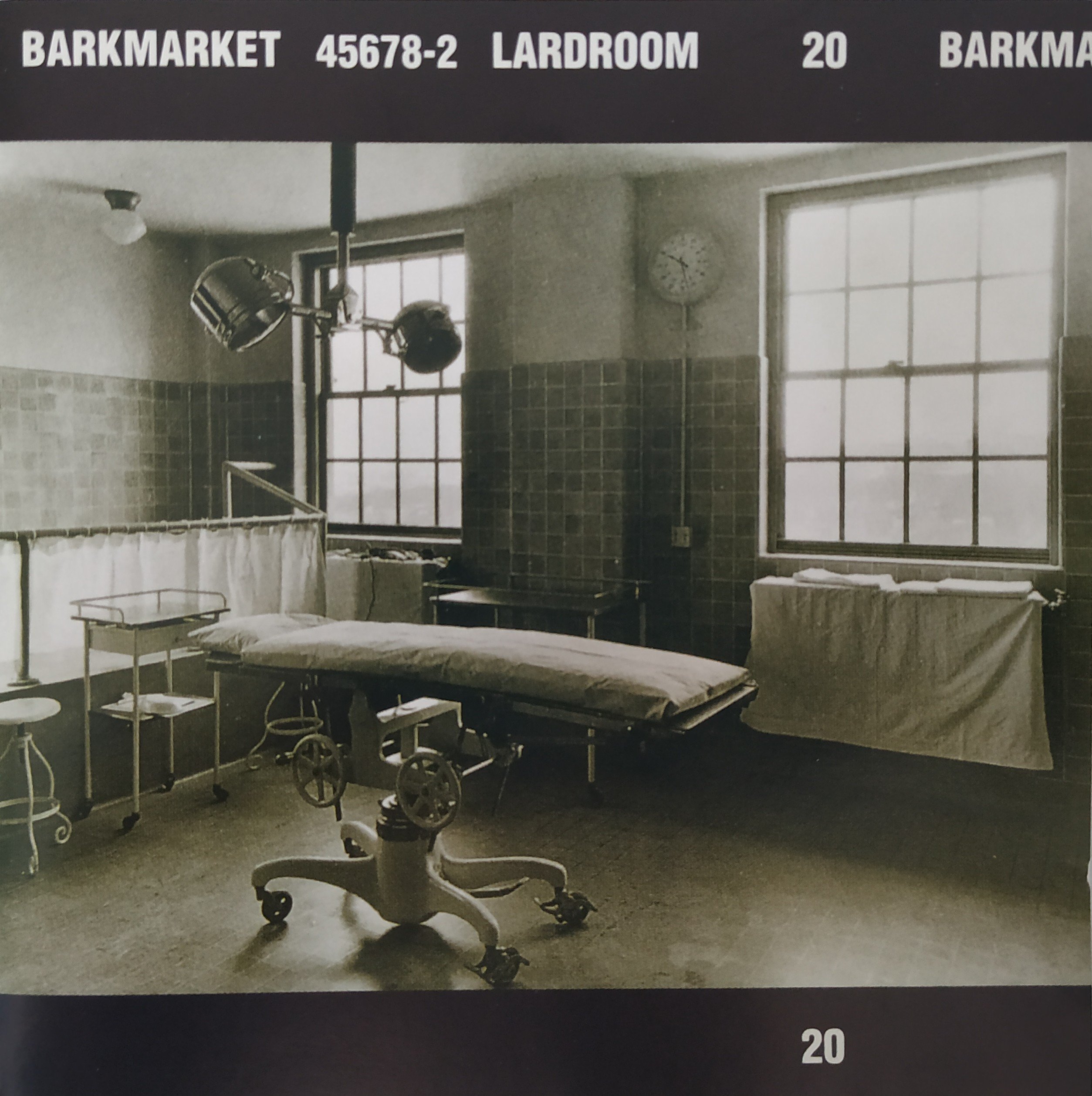
BARKMARKET: Lardroom

ARTFUL NOISE ROCK PACKS DOWN-TO-EARTH PUNCH

Brooklyn’s Barkmarket are now probably better known as a footnote in the production career of hollerer-guitarist Dave Sardy, but footnote is an F-word we’ll not allow. There’s no way this band should be reduced to footie status. So let’s rewind to 1994 when, after three albums, Barkmarket opened the door to their Lardroom.

Lardroom by Barkmarket
Lardroom: home comforts AWOL

Back then, bands like Rollins Band, Helmet, Quicksand and Cop Shoot Cop were probably as popular as they were ever going to get. They hit the festivals, got their videos aired and, in the Rollins Band’s case, tapped briefly on the mainstream’s outer window. These bands had a street-smart intelligence to match the physicality of their music.

Barkmarket grafted in the same neighbourhood, forging a blue collar slab-shifting pummel that’s experimental yet never pretentious … just honest. Creative. Rocking, always. Strange, often. Surreal round the edges, factory-line solid in the centre.

I DROWN kicks off this 15-minute EP with an Opiate-era Tool/non-staccato Helmet blend that runs a fluid groove, especially when it ramps up the body slam at the end. Time signatures shift around but we’ve only got 3 minutes, so you know there’s no indulgence. It’s too rooted in punk and post hardcore sensibilities, but that fluidity of movement within and around the 4/4 is what sets this stupendous track apart. The riffs almost moan but it’s a heavy, girder-like moan. And Sardy lays a voice to match, howling with opaque wordage.

The rest of the EP (except the PUSHIN’ AIR collage goof-off) has the same unwavering aesthetic: freewheeling riffs that take no shit, occasional detours that elevate and separate from brawn-heavy metal. DIG IN’s megathick bass pulls us down some dank Louder Than Love grunge hole, LITTLE WHITE DOVE packs on-off thrash charge and JOHNNY SHIV ends the show with chords that bend and warp, like something being built, hammered and sculpted into being. Got a real sweet groove, too – offbeat and tough – before breaking down to a failed-engine ending.

Where did Barkmarket go from here? Not far. The L Ron album followed in 1996 and then they called time. Dave Sardy went on to produce about a million other bands and score films. No idea what happened to the other band members. No idea about their first two albums either, though Gimmick and L Ron both get the vote. But this EP? A pure shot of golden-age noise rock with sideways smudges.

Released: 1994 on Def American

Length: 15 mins 11 secs

Tracklist: I Drown – Dig In – Pushin’ Air – Little White Dove – Johnny Shiv

For fans of: Helmet, Quicksand, Rollins Band, early Clutch, Kepone, Jesus Lizard, Cement

VAN HALEN: Fair Warning

BEFORE THE CABARET: A DARKER TURN

Note: This review was started and left unfinished months ago, long before Eddie Van Halen left us. But the notes informed this EVH post and some of its sentiment will be repeated here. RIP EVH.

Why are we wrapped up in Fair Warning?

This time, it’s because of Music Blues. The suicidal filth scuzz guitar draaaaag Music Blues. The Van-tithesis Music Blues. How so? Well, by my amateur reckoning, the diabolical dirge crawling out the back end of Things Haven’t Gone Wellreviewed right here – just has to be a deranged warping of Van Halen’s strangest moment, and that moment happens to be on Fair Warning. Which means it’s Fair Warning replay time. Again.

Fair Warning: less cheer

Every time I play this 31-minute 17-second gem, bought more than a decade after my first Van Halen love-in (a summer ’91 purchase of I, II, Women and Children First, and the then-new F.U.C.K.) wore off, it’s a reminder of how much it caught me off guard. Still does. It’s Shock and Awe with a smile, as the best Van Halen always is, but with less sunshine. With Fair Warning, you get no cover versions. No ballads. No cheese. No synthy rock-lite breezers. Even the artwork tells you a different mood is lurking … how un-Halen is that painting on the cover? Absolutely nothing like the action band shots of before. Fair Warning is where Van Halen Gets Serious – well, as much as they ever could – by turning the VH attack into something a little tougher and meaner …

…which brings us to track 1. Mean Street.

Fading in fast on a cosmic fretboard wave, Eddie’s unaccompanied intro swoops and hangs for a second like a UFO beaming an unearthly rock entity into your brains. GAWP TIME. But the best comes next – a standalone riff, pure A.F., bridging to an almost-funk full-band VH groove that drives HARD. No indulgence, no hanging around. Just effortlessly dextrous interplay which shows that Eddie’s liquid rhythm is easily the equal of his virtuo-so-hot leads.

For a masterclass in how to use space in a rock song, check the breakdown at 3′ 20”. It’s one of their weapons: knowing when to break down, drop out and rebuild a song is a massive part of their explosive early vibe. It’s what separates Van Halen from itself, too – those first four albums are a stylistic block, distinct from what came later. There’s a precision around each instrument that’s ultra clean and cut-throat sharp, yet there’s no bleed.

And let’s not forget that, with Mean Street, Fair Warning has a track #1 that matches the insanely high bar set by Van Halen’s previous album-starters Running With the Devil, You’re No Good, and And the Cradle Will Rock. Heavy menace radiates from each.

From that colossal start, Fair Warning doesn’t falter. “Dirty Movies” rubs sliding riffy sleaze up against Michael Anthony’s totemic bass, Sinner’s Swing! shifts like a rough Hot for Teacher prototype, and the 2′ 44” breakdown in Hear About It Later is one of many Eddie Moments – check that rhythm play, just before the solo. Sweet. Every track brings its own moments, too many to go into, so let’s skip to the un-Halen ending for a minute.

So This Is Love? is the last track of lit-up harmonies before a two-part downer finale, starting with Sunday Afternoon in the Park – the one copped by Stephen Tanner in Music Blues, the electronic instrumental that’s part symph, part dying cyborg. Really? Yeah. You can see where 1984 (the track) came from, right here in this John Carpenter-ly chill. Then One Foot Out the Door fades in with a couple of verses and two Eddie solo flurries that absolutely burn before the fade to black. It’s as if they decided halfway through that they didn’t need a proper song so they ditched the lyrics and Eddie just played the shit out of what was left, calling it a wrap in under 32 minutes.

This is what makes Fair Warning a really great Van Halen record: the unresolved ending and the out-of-character electronics that sign off half an hour of hard-rock manna. Sure, there’s a lot more to peak Van Halen than just Eddie, especially the rhythm section and vocal harmonies, but the joy you get from hearing him play gives you a lift, even when you’re already flying. It’s fucking exciting. And you’re struck by how much he plays too, never stopping but never overplaying either. Room to shine? Absolutely. Out of control? Never. Look how short the running times for those early albums are. All virtuosity is within the structure of the song.

No-one’s pretending Van Halen are the band you’d take to your grave, even though many will. But if you haven’t heard Fair Warning, either because you just never got round to it or because Van Halen are a joke to your metal sensibilities, you’re missing out. It’s Van Halen with zero weaknesses – and not even the debut managed that (hello, Ice Cream Man). If it doesn’t convince, fair enough. But to me, Fair Warning is the strongest eruption from the white-hot years.

And if it’s good enough for Music Blues …

Van Halen: Fair Warning (Warner Bros, 1981)
Mean Street
“Dirty Movies”
Sinner’s Swing!
Hear About It Later
Unchained
Push Comes To Shove
So This Is Love?
Sunday Afternoon In The Park
One Foot Out The Door

MUSIC BLUES: Things Haven’t Gone Well

HARVEY MILK SOLO MAKES MUSIC FOR BREAKDOWNS

An absolute hulk of a slow-chord surge opens the album in short but wildly heroic style. 91771 is slow enough to be doom but nowhere near sombre enough as it pulls you into the euphorically funereal, if that makes any sense. Drone and sustain pumps your veins with noisy nutrients. Feels good.

This is Music Blues, the solo project of Stephen Tanner, Harvey Milk bassist. 2014’s Things Haven’t Gone Well is his first, and so far only, solo record.

Shame. Things Haven’t Gone Well belongs in anyone’s sludge-noise collection, down at the squalid end where the fuck-ups and failures hang out, and Tanner trades on two strands of guitar-driven dronedoom: one is total pessimism, the kind that beats you down with airless oppression. The other is total pessimism piss-streaked with rock-ist uplift, like 91771 (Tanner’s birth date), and it’s those rock-acknowledging downers that make the record work, though you gotta be patient. Aside from those, a couple of short clips from the Tom Waits School of Freak keep the album broken and fragmented. There are no vocals.

Things Haven’t Gone Well … no shit

The autobiographical PREMATURE CAESAREAN REMOVAL DELIVERY follows straight on from 91771’s colossal awe, but the euphoric touch has evaporated to leave skeletal chords slamming. HOPELESSNESS AND WORTHLESSNESS and FAILURE’s Sunn O))) stylings lift the mood not one bit, and wedged between them is TRYING AND GIVING UP. Get through the defeated first drag and you’ll hear a guitar morph from death-slow one-chord reps to a rough-as-fuck blues lick drowning in diesel dregs. It’s the slowest, grimiest 12-bar you’ve never heard. ZZ Top on a dying battery.

Seven tracks in, you might feel there’s not much to grab hold of. You’d be right. 91771 and a mutant Texan blues tip is scant return.

But IT’S NOT GOING TO GET BETTER is where it picks up (relatively) after the ghostly DEATH MARCH interlude. Here we get guitar breaks and a real human touch instead of blackout basement isolation. Thick, sludgy beauty with light. It crushes, but it’s the crush of a communal gig pile-on.

Then the big one: TREMENDOUS MISERY SETS IN. Tremendous misery – nice. TMSI is final proof that, even on an album as depressed and damaged as this one seems, Stephen Tanner has a Propensity to Rock Out and here his Harvey Milk spilleth over in that Corrosion of Conformity-channelling-Thin Lizzy way, but inebriated, messy and mournful. ’tis majesty on a slow repeat. Then THE PRICE IS WRONG conquers all with a massive Rock ending, completing the album’s transformation from No Hope to Slight Hope.

The closing BONUS TRACK just has to be a Van Halen tribute – not Massive Hits Halen but Weirdo Least Halen, aka Sunday Afternoon in the Park from their toughest (best?) Fair Warning album.

Which means we’ve got a noise rock record that ploughs mental breakdown and dark autobiography, touches on ZZ Top and CSNY (Teach the Children) and ends with a Van Halen freakball …

… sounds about right. Things Haven’t Gone Well comes across as a journey through grief – it nails the slow, draining, disorienting feeling and physicality that grief brings, yet it’s distracted and sketchy too. Music Blues might be depression as expression, but in the end Tanner can’t restrain his need for primal oversized riffs. You can’t keep that down.

Things Haven’t Gone Well (2014, Thrill Jockey Records)
91771
Premature Caesarean Removal Delivery
Teach the Children
Hopelessness and Worthlessness
Trying and Giving Up
Great Depression
Failure
Death March
It’s Not Going to Get Better
Tremendous Misery Sets In
The Price is Wrong
Bonus Track

THE DAMAGE MANUAL: 1

INDUSTRIAL POST-PUNK LEGENDS FORM A YEAR-2000 SUPER COLLIDER

When A Perfect Circle did When the Levee Breaks for their eMOTIVe album, they pulled off a smart reworking that stripped it of Zep’s defining feature – Bonham’s heavy authority – and completely rewired it. Instead of thunder, we got rain. Gentle, hypnotic, tinkling rain. It’s a classy, masterful take.

Damage Manual offer no such subtlety on SUNSET GUN, the opening shot from their 2000 EP, 1. The Levee lift is huge.

Which would rightly be condemned as a lack of imagination IF the band didn’t already have 20-plus years of experience, weren’t among the most influential musicians of the post-punk generation, and didn’t convert it into a super-amped contemporary crossover. But they do, they are and they did. A jittery cut-up intro unleashes a Headley Grange-sized beat while a swirling riff channels the Four Symbols Page drone.

Who’s behind this collision of tech-ness and beast rock?

Geordie Walker, Martin Atkins, Jah Wobble, Chris Connelly.

Killing Joke, Public Image Limited, Revolting Cocks.

Damage Manual.

Credentials or what?

The Damage Manual: 1

After that killer start, DAMAGE ADDICT pulls a big-time Wobble with some enormo-dub space bass that bottles the PiL spirit but, crucially, is less cold, less austere. Instead, it carries a real sampler’s vibe. Smell the RevCo.

And with those two tracks, you’re set for the rest of the EP. It does sound like component parts pulled together, but the result is far more organic and flowing than factory line assembly. It zips with fresh edge, psyche trips and beat-heavy production. Whether it was the vigour of the mid/late 90s crossover scenes that re-energised these 40-ish year-olds, I don’t know, but Damage Manual sounds free and vital. Definitely got a kick.

SCISSOR QUICKSTEP discharges mechanised punk over playful bass, while BLAME AND DEMAND is another bass and drum monster where Geordie’s guitar burns hard through early PiL-style rhythms. Possibly the EP’s defining track.

Wrapping up the session before a couple of remixes is LEAVE THE GROUND, an end-of-gig trashing where Connelly’s up-front falsetto falters like gutter Bowie while industrialised rhythms beat the melody down. “More human contact will just make you ill…” is Connelly’s fading refrain. Oddly apt for our COVID-19 days, two decades later. And Geordie is more unleashed here than you’ve ever heard him.

Anyway, that’s it: 1 by Damage Manual. All songs are credited equally to all four players. Sunset, Damage and Blame distil the PiL/RevCo/KJ spirits most obviously, while the other two – remixes excepted – bring the quirk and the range. But what really grabs when you listen to it again is the force of Geordie Walker’s guitar tone. He’s always been His Own Voice, but with Killing Joke on a continuing cycle of top grade albums, it’s easy to forget just how distinctive he is. Seeing KJ live is one way to keep your complacency in check. Hearing him somewhere else – like this – is another.

But I mention Geordie only because his is the parent band I’m most familiar with. Every player here is a full-on personality and you get it all. No-one dominates. No-one sits back. Vital stuff. Prepare to be sucked down a Killing Joke/PiL/Waxtrax sinkhole when you’ve played it.

Damage Manual: 1 (2000, Invisible Records)
Sunset Gun
Damage Addict
Scissor Quickstep
Blame and Demand
Leave the Ground
Bagman Damage
M60 Dub

Damage Manual put a self-titled album out the same year which is equally worth checking. The four remixes on the end dull the album’s impact a bit – perils of the CD age, they’d be better off on a separate disc but the core nine tracks are maximum Damage


MINISTRY: Dark Side of the Spoon

PLUNGING THE INDUSTRIAL QUAGMIRE
Chasing a high speed Ministry fix? Just press play – and then leave the building in three minutes. Dark Side of the Spoon is a trudge through a dead man’s blues.

Dark Side of the Spoon by Ministry

Not that you’d know that from the whipcracker opener Supermanic Soul. As insane and ridiculous a start as Ministry ever did, it packs the same dry yammer beat as The Land of Rape and Honey’s The Missing but is heavier, and then WAY heavier – just wait for the second guitar to drop its motherlode, it’s absolutely filthy. More a corroding quake than a riff, it’s one of those WAAAAA! moments on a shit-hot track where Al Jourgensen sounds insane throughout, cooking his voice into a bubbling garble to match the heroin reference of the album title.
Ministry then punch the decelerator for a minute or four. Whip and Chain broods gothic heaviosity on a two-chord crush – kinda like The Fall from Filth Pig – before Bad Blood flirts with a metronomic pace pick-up, which makes you think that Dark Side’s going to drop some nippier Ministry morsels after Filth Pig’s murk

but no. That’s it, speed freaks, so unbuckle up and prepare to crawl. Eureka Pile slows the pulse with worm-shaker bass and space, loads of it, round a faltering riff, and this is the truth of where Ministry are/is on DSOTS. The music here isn’t the mechanised industrial metal attack of old. It’s flawed and damaged by fingertips with destructive prints. The mess-age is human, and Filth Pig was no aberration.

It was a sign.

Mid-album oddball Step swings, literally, like an out-of-character gatecrasher before the album lurches back to Dark Side’s draggy mid-tempo type and sticks there. The slow-pick banjo and skidding sax on Nursing Home conjure hazy, vaguely middle Easternalia, while the freakish bass on Kaif – crumbled by distortion – is nothing less than monstrous. Definite high points, those two.

By the time we get to Vex & Siolence, we’re defeated. Lyrics reference ‘a fading memory’, and whatever those words actually refer to, they’re an apt descriptor for what the old-school Mind/Psalm-era Ministry has become – a memory. There’s little here to evoke their pre-Filth Pig firepower. Jourgensen’s flat intonation suggests a body that’s heavy, weary and about to give up. Life is leaking away. Maybe it just doesn’t care. Electrifying solo, though.

And this is the mood of the album, to me. It’s a band in the pits, resigned to the end-life, unable to stop yet still pulling out the quality – they’re just pulling it in a wildly different direction to many fans’ expectations. Is it down to peak substance abuse and the collapsing relationship between Jourgensen and Paul Barker? Yes. But it makes for a compelling album that’s far better than critical indifference that flops around it.
10/10 ends the album in 7/4 time with energy and optimism, or maybe it’s just relief. There are no vocals. Saxophone flurries take the voice’s place, as if the body (band?) died and now we’ve finally got some respite with crunching metallic loops for company.

We know that Neil Young recorded his ‘ditch trilogy’ in the 70s. Dark Side of the Spoon may well be the mid-point of Ministry’s own three-part ditch hell, completed by 2003’s Animositisomina. After that, from Houses of the Mole onwards, they opted for machine riffs, speed beats and megaphone sloganeering which set the direction, more or less, for Ministry from then till now – fast and metallic, more direct. Dark Side of the Spoon is messy, stumbling and adrift, not so much a downward spiral as a sunken one.

But if you’re open to that kind of mix, it’s one of their best – maybe also their most varied after Land of Rape and Honey – and a showcase for Jourgensen’s production, even if, as he says in Ministry: The Lost Gospels According to Al Jourgensen, he can’t remember making it. Fathom THAT.

Ministry: Dark Side of the Moon (Warner Bros, 1999)
Supermanic Soul
Whip and Chain
Bad Blood
Eureka Pile
Step
Nursing Home
Kaif
Vex & Siolence
10/10
+ hidden track

ONE DAY AS A LION: One Day As A Lion

DISTORTED AGITATION FROM DE LA ROCHA AND QOTSA DRUMMER
Given that the world has been spiralling to shit, you might have found yourself reaching for angrier music more often. I have. Music that’s got the gravitas, the provocation and the intellect to somehow document and deal with the insane wrong-ness of dumbfuck cops killing black people, and dumber-fuck ‘cenotaph protectors’ destroying Black Lives Matter protests in the false name of monument-al preservation. Dipshits and hackle raisers. No wonder Terrace Martin’s Pig Feet, wrapped and dropped within days of George Floyd’s killing, hits so hard. Pig Feet does not flinch.

Neither does Zack de la Rocha. His full-tilt delivery always captures these moments and even now, aged 50, he’s got the fury – check the explosive verse in Run The Jewels’ JU$T for evidence of that. His voice is the sound of a fight. But with Rage Against the Machine, it battles with another wild voice – Tom Morello’s guitar – and winds up less prominent in the rock orthodoxy of the RATM set up.

Maybe this is why he’s been such a serial collaborator since RATM last put a record out. Those guest slots put his voice up front, give it room, give it oxygen. They make his words flammable.

This is also true of the short-lived 2008 project with Jon Theodore, One Day As A Lion. As a primal drum-bass effort where the voice gets a 5-track vent, it’s way less Rock than Rage – got a raw urgency and a just-produced-enough attitude that’s clammy with rehearsal-room heat. Nothing arena-sized, no anthemic hooks, no guitar, just a very live-sounding gig stripped back to stiff rhythms and hard words. And with Theodore, ex Mars Volta and now Queens of the Stone Age, behind the kit, you know the drums are solid. His beats aren’t minimal, but neither are they fussy. They are, somehow, hip-hop friendly.

One Day As A Lion EP

Life beyond Rage

Wild International‘s petro-fumed groove is the mid-tempo starter that smoulders rather than explodes, like it’s on cruise control looking for a target. Downtuned bass riffs swell for the chorus, thick and sticky not liquid slick, and this track sets the vibe for the whole EP. The tempo (agitation?) picks up for Ocean View, Last Letter and One Day As A Lion, while If You Fear Dying locks onto the same spacious groove as Wild International. Other than that, you know roughly what you’ll get, track to track – unlike, say, Saul Williams’s self-titled conflict-zone masterpiece of hip hop, poetry, electronic, industrial and spoken word from 2004 (where Zack winds the tension on Act III Scene 2 [Shakespeare]).

One Day As A Lion don’t do genre hops and mood shifts. Their force is rough-edged, avant-ish primal rock with urban backbone and no, it wouldn’t hold your attention musically for a full album. But as an EP, as a righteous blast, it works ‘coz you get 20 uninterrupted minutes of de la Rocha flow, and this is the key point. As we know, he’s got that gift for making you BELIEVE – absolute conviction and persuasion every time, and right now we need that voice even if we didn’t know it. JU$T is the 2020 reminder. One Day As A Lion might be more curio than must-have, but as a non-Rage de la Rocha fix, it’s pure. The message remains the same

but now it’s 2020. FFS.

‘Time is coming
rising like the dawn of a red sun
If you fear dying
then you’re already dead’
(If You Fear Dying)

One Day as a Lion EP (ANTI-RECORDS, 2008)
Wild International
Ocean View
Last Letter
If You Fear Dying
One Day as a Lion